

This article was paid for by a contributing third party.

Roundtable: Transforming risk management in commercial insurance
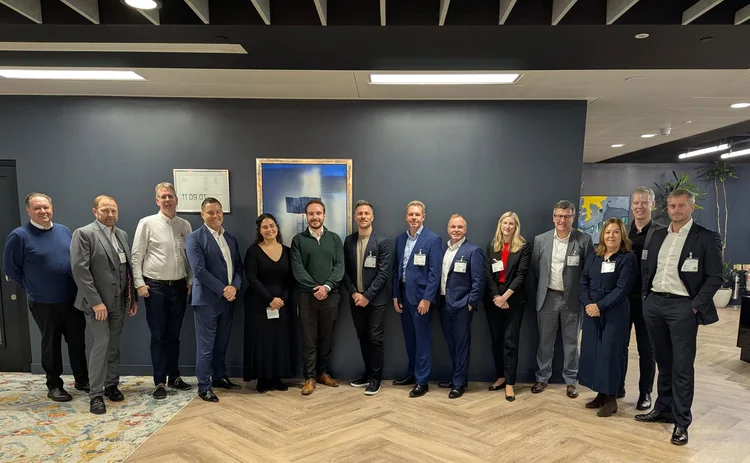

From AI and sensors to board-level governance and SME engagement, an Insurance Post roundtable held in conjunction with RiskSTOP delved into how insurers and brokers can help businesses navigate a complex risk landscape and strengthen loss prevention for the future. Rachel Gordon reports
Attendees
- Chris Brady, CEO, corporate, international and risk advisory services, Everywhen
- Ian Clayton, Managing director, Clear Risk Management
- Rob Dakin, Head of business resilience management delivery, Axa Commercial
- Stuart Danskin, Director of underwriting, Arch UK Regional Division
- Reem El Khatib, Risk management executive, Lockton
- Michael Fricker, Group corporate risk manager, Brown & Brown Insurance
- Sam Haslam, Director and practice leader, Risk & Resilience Advisory, WTW
- Faith Kitchen, Head of customer relationship management, Allianz Commercial
- Yvonne Moore, Head of resilience solutions, UK, Zurich Insurance
- Andy Northcott, National sales & distribution leader, Gallagher Risk Management
- Andy Partridge, UK digital development director, PIB Insurance Brokers
- Johnny Thomson, Group head of strategic planning, RiskSTOP Group
- Danny Lillington, Managing director, RiskSTOP Group
- Wayne Tongue, Managing director, Bspoke Commercial & Property Owners
- Jonathan Swift, Content director, Insurance Post [moderator]
Effective risk management is the proverbial win-win, resulting in fewer claims for insurers, while companies benefit from better continuity and lower premiums.
But take-up can be hit and miss. There is a lack of awareness, particularly among smaller firms and, even among large businesses, the approach can be inconsistent.
Discussions opened with experts being asked what value businesses placed on risk management.
Faith Kitchen, head of customer relationship management, for Allianz Commercial, said large clients are “far more likely to see the link between risk management and their own business reputation and commercial success.
“We see them taking it very seriously at board level and engaging. But, at SME level, it’s harder to link value to commercial success.” She adds the difficult economic environment is also a barrier, when some “are operating on a shoestring and facing challenges like National Insurance costs.”
Rob Dakin, head of business resilience management delivery at Axa Commercial, said triggers for risk management take-up include a recent loss, or areas such as supply chain management and CSR.
And engagement also comes from the right communication. Simply forwarding lengthy and dry documents that an SME business owner will be too busy to read is not the answer.
Dakin pointed out there are codes of practice and industry standards that are core to safety but these should be made digestible by “pulling out those salient points”.
As Stuart Danskin, director of underwriting at Arch UK Regional Division, said: “Insurers should not scaremonger. We can’t just warn companies about what has happened to others.” Indeed, this may fall on deaf ears if a business has never experienced a serious loss. Instead, he says, the emphasis should be on seeing the benefit such as with staff safety and business continuity.
Our goal isn’t to just get the risk as low as possible and write a big list of all the risks – it’s to make sure the client is hitting that middle point between too little and too much.
Sam Haslam, WTW
As Michael Fricker, group corporate risk manager at Brown & Brown, commented: “Sometimes, you need to start at the basics, and it sounds quite daunting to say to an SME, ‘What’s your risk register?’… because they are unlikely to know. So you sit down with them and ask what are the five things that keep you up at night? You can then say, well, that’s your risk register.”
Using real life examples is also seen as a great way to educate clients. Fricker said cyber is a prime example, since both large and small companies can be affected.
Yvonne Moore, head of resilience solutions, UK, Zurich Insurance, agreed: “There have been some high-profile outages. These risks can bridge the gap between large corporates and SMEs – all businesses face these risks and there is so much dependence on third party platforms.”
Sam Haslam, director and practice leader at WTW Risk & Resilience Advisory, pointed out there needs to be acceptance of risk, since it is fundamental to running a business.
“Our goal here isn’t to just get the risk as low as possible and write a big list of all the risks – it’s to make sure the client is hitting that middle point between too little and too much, and often that’s quite a light-bulb moment.”
SMEs may need help understanding the ‘why’ behind what we do and it’s not just when you’ve had a claim.
Andy Northcott, Gallagher Risk Management
Of course, for SMEs, risk management can be a matter of resources. As Chris Brady, CEO, corporate, international and risk advisory services at Everywhen, highlighted, large clients “have dedicated internal risk specialists, covering areas such as property, fleet and health and safety.” But, he said, it is vital that guidance is not the exclusive domain of big business and more must be done to ensure relevant information is accessible and at scale for SMEs.
Andy Northcott, national sales and distribution leader, Gallagher Risk Management, continued: “SMEs may need help understanding the ‘why’ behind what we do and it’s not just when you’ve had a claim. There’s a whole range of reasons to try and mitigate their risks, support them to do a better job, but it’s getting them to realise that.”
An evolving picture
Risk management has to be a continuous programme. As Moore said, “It must be an ongoing process, since clients need to understand how risk is evolving and changing in a volatile world.”
Reem El Khatib, risk management executive at Lockton, believes a dynamic approach is essential. “We can no longer depend on historic data – we need to look at real-time data to better predict future events.”
She added companies should also move away from siloed practices and adopt a more integrated approach. “Risk ownership can be fragmented – you find different risk disciplines and activities across a business… it’s not often they look at health and safety, supply chain, emerging risks, operational and strategic, from a holistic perspective.”
Cost challenges
Resources may be one barrier for SMEs to implement a risk management strategy, but so is cost – advisory is likely to be on a fee basis. But this is where technology may be able to assist, such as in menu-based risk guidance.
Wayne Tongue, managing director at Bspoke Commercial & Property Owners, explained he favours offering such tools as guidance from brokers to ensure clients can make informed decisions. “Awareness is really important – because what most want is operational stability – and they won’t have that unless they understand what risks they face.”
From reactive to proactive
Meanwhile, experts are seeing a welcome shift from the traditional reactive approach within insurance.
Danskin said progress is evident. We can see how things have changed over the years. In the past there was little understanding of manual handling of risks, or even of smoking in warehouses, for example. We can also see how many now place far more emphasis on IT security and passwords.”
Johnny Thomson, group head of strategic planning at RiskSTOP, commented: “We’ve seen when there is a serious incident, such as with Jaguar Land Rover’s outage, that it helps everybody perceive the risk. So that’s the big challenge – how do we change that perception and get their willingness to invest beforehand - knowing that proactive risk management is the thing that’s most effective.”
Transformational technology
Technology is also seen as an important driver in improving risk management awareness but certain caveats apply.
Haslam said: “AI’s ability to monitor [arising issues] is exciting. It doesn’t take away from the need for a good risk culture and the discipline to be there, but I think it opens the door to accelerate that shift.”
Kitchen added: “Another example is cars and all the advances such as ABS – we’re seeing technology that is proactive in stopping accidents.”
And Dakin said the message should be about return on investment. “Break it down into something simple – good risk management equals good claims experience, equals better premiums. This is when customers should engage in a proactive approach.”
Northcott sees momentum growing. “SMEs tend to want to do the right thing and they take it incredibly personally if something goes wrong, particularly if a member of staff is affected. A claim can be hugely disruptive.”
Andy Partridge, UK digital development director at PIB, insisted the message should be that “risk management underpins business performance, in areas like financial stability and operational continuity, so it’s really important.”
In terms of technology, Partridge added: “There’s so much data that’s out there. The actual cost to deliver solutions is only ever going to start coming down and that will help companies manage risks.”
Ian Clayton, managing director at Clear Risk Management, believes AI will drive efficiencies. “Getting AI to do some of the basic donkey work really frees up some of the risk management spend, allowing it to be invested more wisely.”
El Khatib continued: “Systemic events are on the rise. You have no choice but to be proactive rather than reactive, maintain the operational continuity and achieve that agility over time. Or you lose your business within weeks – we’re not even talking years.”
Systemic events are on the rise. You have no choice but to be proactive rather than reactive, maintain the operational continuity and achieve that agility over time.
Reem El Khatib, Lockton
A place for people
But technology is only part of the solution. As Danskin said, clients may be able to access suitable packages of information for guidance, but a library of files is likely to be daunting. “SMEs don’t have a team to do this work – that’s why they need human interaction, someone to talk them through it.”
El Khatib pointed out that policies and procedures around risk management and governance are important, “but are people actually reading them?”
AI may be there to help, but it can pose risks too, she says. “Many [companies] don’t even realise that different AI tools are being used by employees across multiple areas in the business. Then you have shadow AI. So, it’s a case of ‘how do we actually control and govern the use of AI, and share awareness internally about the opportunities and threats associated, if we don’t actually know what and where it is being used?’”
Break it down into something simple – good risk management equals good claims experience, equals better premiums.
Rob Dakin, AXA Commercial
Fricker also sounded a note of caution. “You need to realise that results are not taken as being 100% accurate. Information can be wrong and a competent person needs to be involved.”
And Danny Lillington, managing director at RiskSTOP, said data must be properly interpreted and the danger comes when, “The data feeding models is not always accurate – you must have a human element in the middle and that means people being empowered.”
Along with AI, loss prevention is also being boosted by the use of sensors and other systems – as Dakin commented, those to prevent escape of water and detecting pressure are now well proven.
Construction sites are also being made safer through specialist sensors and sprinklers, for example, and robots are also likely to take on more work, including at height. And insurer ‘bursaries’ to pay for this type of technology can be beneficial, even if it is primarily aimed at major clients.
Tongue said he supports insurers partnering with specialist suppliers to boost safety. “Take building control panels – sensors can stop overheating as well as monitoring over-usage of air conditioning. When implemented, I think we’ll see loss ratios improve and I want to see this moving forward.”
Fricker added designers must be on board. “We need better materials and systems from day one. We’re still seeing buildings that have a combustible roof.”
Meanwhile, Kitchen said it can be a frustration if companies do not take up the latest safety innovations: “We can offer decent bursaries, but they’re not always spent.”
New insurance for a new age?
Better data is having an impact on underwriting and risk management and the experts were asked if they felt traditional policies could change – including if the annual renewal would remain appropriate.
Partridge said: “With [initiatives like] the internet of things you’ve got so much data out there we may have policies that can more closely follow a business – whether they grow or shrink – but that data will still need validating. Human interaction will remain vital.”
He questioned whether the annual renewal can create friction. With a policy simply running in the background, it gives an opportunity to change the dynamic to focus the client on risk management rather than an annual review of your insurance cover.”
The data feeding models is not always accurate – you must have a human element in the middle and that means people being empowered.
Danny Lillington, RiskSTOP
Tongue says attitudes are changing as can be seen in the experience of financial services, which less business is conducted face to face, except in the case of complex areas like inheritance tax.
And Partridge said he deals with more clients who do not want a traditional visit. “It’s becoming more of a self-serve solution [for some],” he says. “That’s a challenge for the broker, because trust is built on people.”
But, as Fricker noted, remote and infrequent interaction can lead to inaccuracies. “My team has experienced asking clients if anything has changed in the past year and they are told it hasn’t, but then they see a new building on site, for example. An annual renewal is too transactional and does not support risk management.”
Clayton added: “We’ve had real success where our risk management teams are out there every month, boots on the ground. They see the site rather than just the boardroom and that matters. The feeding back makes the renewal a lot easier and we fully understand what the client is about.”
Kitchen explained taking a group of clients to [automotive risk intelligence specialist] Thatcham has proved useful, allowing the latest information on vehicle technology to be imparted along with sharing knowledge and networking.
As RiskSTOP’s Thomson commented, risk management is no longer “about counting fire extinguishers”. “The role is going to evolve and will include more on the behavioural side and data interpretation.”
Haslam concluded: “We will continue to rely on some inherently human characteristics and traits, such as curiosity, such as willingness to learn, the ability to learn things and analyse the impact on your organisation.”
Indeed, it was noted while robots may be used more, the human overseeing them will face blame if there is an error. And at the heart of this, it will be specialist risk management expertise that plays a core role of keeping businesses safe.
[Main picture l-r: Danny Lillington (RiskSTOP), Michael Fricker (Brown & Brown), Ian Clayton (Clear Risk Management), Wayne Tongue (Bspoke Commercial & Property Owners), Reem El Khatib (Lockton), Sam Haslam (WTW), Andy Partridge (PIB Insurance Brokers), Rob Dakin (AXA Commercial), Chris Brady, (Everywhen), Faith Kitchen (Allianz Commercial), Andy Northcott (Gallagher Risk Management), Yvonne Moore (Zurich Insurance), Johnny Thomson (RiskSTOP), Stuart Danskin (Arch UK Regional Division).
Sponsored content
Copyright Infopro Digital Limited. All rights reserved.
As outlined in our terms and conditions, https://www.infopro-digital.com/terms-and-conditions/subscriptions/ (point 2.4), printing is limited to a single copy.
If you would like to purchase additional rights please email info@postonline.co.uk
Copyright Infopro Digital Limited. All rights reserved.
You may share this content using our article tools. As outlined in our terms and conditions, https://www.infopro-digital.com/terms-and-conditions/subscriptions/ (clause 2.4), an Authorised User may only make one copy of the materials for their own personal use. You must also comply with the restrictions in clause 2.5.
If you would like to purchase additional rights please email info@postonline.co.uk